
An Australian service business can have three invoice problems at once, a clean progress claim that's due today, a client who usually pays on time but missed the due date, and a disputed account that should never have been chased in the first place. A single generic message can be too early for one customer and too soft for another, which is why the strongest invoice reminder email template is the one that names the invoice, amount, due date and next step, then matches the payment stage. Australian timing matters here, too, because late payment is still common, and the first reminder often needs to land sooner than many teams think, with a clear path for questions and a human review gate where the account is sensitive.
Table of Contents
- 1. Clear Invoice Details, Name, Amount and Due Date
- 2. Courtesy Reminder Near Due Date
- 3. Escalating Follow-Up Sequence, Multiple Touchpoints
- 4. Dispute-Aware Template, Conditional Response Path
- 5. Payment-Plan Template, Flexibility for Cash-Flow Strain
- 6. Short-Cycle Reminder for High-Volume, Low-Value Invoices
- 7. Human-Approved Escalation, Managed Review Gate
- 7-Point Invoice Reminder Template Comparison
- Turn Templates Into a Controlled Follow-Up System
1. Clear Invoice Details, Name, Amount and Due Date
A good reminder starts with facts, not persuasion. If the recipient can see the invoice number, amount and due date in the first line, they can match it to their records without digging through old emails or asking accounts payable to search again. That's especially useful for Australian service businesses juggling multiple jobs, sites or retainers, where one vague follow-up can slow payment and create avoidable back-and-forth.
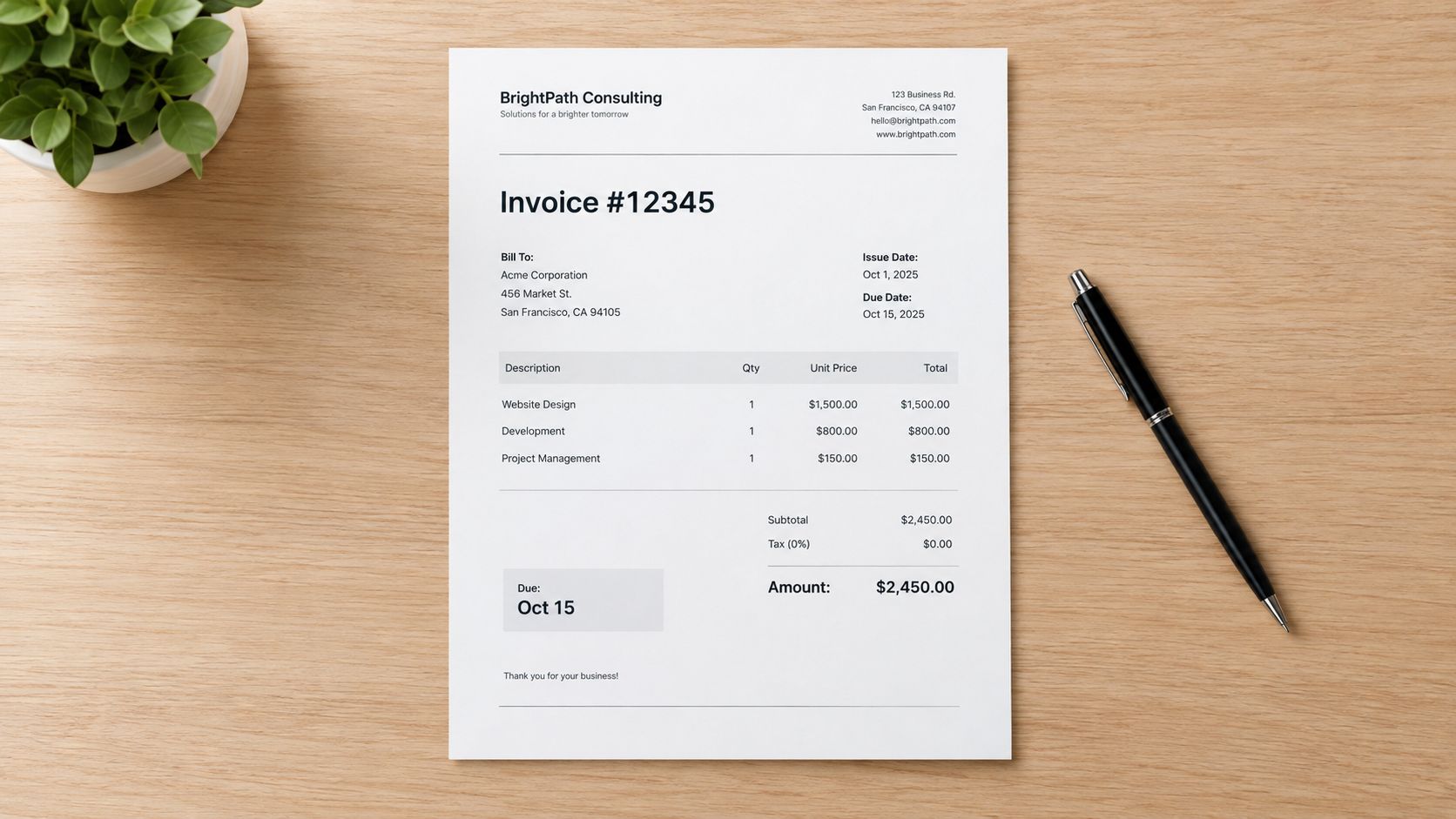
A practical version reads like a courteous confirmation, not a sales pitch. It should restate the invoice details, then give one clear next step, such as asking the client to reply if they have questions or to raise a dispute by a set date. That keeps the message short, recognisable and easy to act on.
Practical rule: check the invoice in your accounting system before the reminder goes out. A reminder sent on the wrong amount or against a paid invoice creates more damage than a late payment does.
For Australian teams, the sender name matters as much as the wording. Use the business name consistently so the recipient recognises the message instantly, and keep a clear escalation path for accounts that are disputed or paused. If you want a reminder that sits neatly beside the invoice record, tax invoice requirements in Australia are a useful reference point for the fields that should already be on the document.
A Simple Structure That Works
- Invoice identity first: put the invoice number, amount and due date in the opening line so the message is searchable and specific.
- One direct action: ask the recipient to reply with questions, confirm a payment date or advise if there's a dispute.
- Consistency in sender name: send from a recognisable business mailbox, not an anonymous inbox.
- Exception handling: if the invoice is disputed, pause the chase and hand it to a person.
That structure works because it reduces decision fatigue. The recipient knows exactly which invoice you mean, and your team has a record that can be escalated or paused without rewriting the message format each time.
2. Courtesy Reminder Near Due Date
A courtesy reminder works best when it sounds like a professional nudge, not a collection notice. For an established client, that usually means assuming payment is expected and keeping the message calm, especially in professional services, trade work and project-based jobs where the work is already done and the remaining step is administrative.
The first reminder should stay close to the due date and keep the ask simple. Australian guidance points to a reminder window of 1 to 3 days after the due date for the first polite nudge, then a stronger follow-up if there is still no response within 14 days and a possible letter of demand after 30 days unpaid. For Australian service businesses, that timing supports a short, courteous first contact while the account is still familiar to the client.
A builder chasing a progress claim, or a firm following up a monthly retainer, does not need to over-explain. State the project or service, repeat the due date, and ask for one clear action, such as payment by the due date or a reply if there is a problem with the invoice.
The reminder should feel like part of the job, not an interruption to it.
Operationally, the reminder needs to be scheduled before the due date arrives. The invoicing workflow should already show who owns the account, when the next reminder goes out, and whether a person needs to check for a reply before any follow-up becomes firmer. MYOB's overdue invoice guidance supports that stepped approach, with reminders sent on or near the due date and then again about a week later before formal action.
3. Escalating Follow-Up Sequence, Multiple Touchpoints
A single reminder rarely fits how overdue accounts behave. A client may miss the due date, ignore the first note, then respond only when the tone changes or the issue is passed to someone else. An escalating sequence gives you room to move from courtesy to firmness without rewriting the billing record each time.
The useful split is by payment stage and operational risk. The first message stays brief and human. The second asks for a payment date or a clear reason for delay. The third can state that the invoice is now overdue and needs action. If the account still sits unpaid and there is no response, the final step should follow your terms and your internal approval process.
A managed sequence also needs a clean stop rule. If the client replies with a dispute, a partial payment, or an internal approval delay, automation should pause until a person checks the facts. That avoids sending a hard chase to someone who is already trying to resolve the account. For teams building that control layer, Truespeak's invoice reminder automation shows how timing, tone and approval gates can sit in one workflow.
The practical trade-off is simple. Faster escalation can improve cash collection pressure, but it can also damage a live relationship if the client has a genuine problem. Slower escalation is safer for the relationship, but it gives a non-paying account more time to drift. The right sequence depends on the work, the client and the size of the risk attached to the invoice.
That is why the wording should change with the stage, while the billing facts stay consistent. Keep the same invoice reference, amount and due date across the sequence, then adjust the ask from reminder, to follow-up, to formal notice. If you need a practical reference for handling that progression without losing the billing context, see managing overdue invoices with GetBill.
What to Tighten as the Account Ages
- Early stage: keep the tone light and specific.
- Mid stage: ask for a payment date and note that the invoice remains outstanding.
- Late stage: add a clear deadline and a named consequence only if your terms support it.
- Exception stage: pause automation when a dispute, partial payment or approval issue appears.
4. Dispute-Aware Template, Conditional Response Path
Silence doesn't always mean refusal. Sometimes the invoice is wrong, the work isn't complete, the client is waiting on internal approval, or there's a quality concern that hasn't reached the person sending the reminder. A dispute-aware template gives the client a clean way to flag that problem without forcing them to reply to a payment chase just to say the invoice needs review.
That matters in service businesses where scope and delivery can be messy, such as renovations, trades, installation work or advisory projects. Australian guidance on overdue payments and debt recovery makes the same point in practical terms, if the account is disputed, the reminder flow needs an exception path, not just a firmer email, as set out by Business Victoria's overdue payment and debt recovery guidance. The right message should make it just as easy to ask for a review as it is to pay.
A strong dispute-aware template gives the client two visible options. They can pay now, or they can reply with the issue and have the account routed to the right person. That keeps the conversation commercial and prevents a human relationship problem from turning into a pointless automated chase.
If the invoice is disputed, stop the automated sequence until someone has checked the facts.
Operational discipline matters here. One person should triage disputed accounts, log the reason, and decide whether to adjust the invoice, issue a credit or hold the reminder until the issue is resolved. For complex service businesses, that trail is more valuable than one more reminder email, because it shows who acted, what was disputed and when the next step was approved.
5. Payment-Plan Template, Flexibility for Cash-Flow Strain
Some overdue accounts need a payment plan, not another reminder. That usually applies when the client is trying to pay, the relationship matters, and the delay comes from cash-flow strain, seasonal pressure or a timing problem rather than avoidance. In those cases, a documented plan is often more effective than continuing the chase.
Australian Government guidance says payment terms should spell out what payment methods are accepted, when payment is expected, and how overdue payments and debts are collected. A plan only works if it is written down, agreed and linked to your collection rules. If the client misses an instalment, escalation should restart clearly.
For builders, trades and professional firms, a payment-plan template can protect the working relationship while keeping cash flow in view. It should confirm the total amount, the instalment dates and the pause in reminders while the plan stays on track. If the client needs room to breathe, ask for a partial upfront payment or deposit so the arrangement has some commitment behind it.
Record the plan in your CRM and flag the account so no one sends another dunning message by mistake. Managed automation helps here because the system can pause reminders, surface the account for review and hand it back to a person if a scheduled payment does not land.
6. Short-Cycle Reminder for High-Volume, Low-Value Invoices
Some businesses don't need elaborate wording. If you issue lots of recurring invoices, for example retainers, subscriptions, memberships or monitoring services, the cost of manual chasing can outweigh the value of a long email sequence. In that setting, a short-cycle reminder wins because it's fast, consistent and easy to scale.
The key is to keep it brief and recognisable. Name the invoice, amount and due context, then give one payment link and stop. That style suits businesses where invoices are low-value, the relationship is routine and the main goal is reducing silent delays rather than negotiating a complex payment issue.
For automation, this kind of reminder should still respect timing and exception handling. Truespeak's invoice reminder software is relevant here because the workflow can be simple, but the logic still needs to account for paid invoices, disputes and accounts that suddenly become high risk. A reminder that keeps sending after payment is worse than no reminder at all.
A short-cycle template should also be easy for the recipient to recognise at a glance. Use the business name in the sender field, keep the sentence short, and make sure the invoice link opens the right record without extra login friction. If many of these accounts stay unpaid beyond your usual cycle, that's a sign the workflow needs a manual follow-up step, not just another automated ping.
7. Human-Approved Escalation, Managed Review Gate
A firmer reminder should not leave the inbox on autopilot. Higher-value clients, more complex invoices and any real chance of a dispute call for a human check before the email is sent. That review protects the relationship, catches invoice errors and avoids the awkward case where a reminder lands after payment has already been made or an issue has been resolved.
The gate itself should be simple. A reviewer checks invoice status, confirms the contact is right, and decides whether to approve, edit or pause the message. Truespeak's human-in-the-loop automation suits this workflow because it keeps the process moving while still leaving room for judgement. For strategic accounts, a finance manager, operations lead or account owner should be able to stop a reminder the moment the situation changes.
Tone matters as much as timing. A builder chasing a retainer, a managed service provider following up on an annual invoice and a professional firm dealing with a large project account need different wording, because the relationship and risk profile are not the same.
A practical setup is one reviewer or a small rotation, a set daily review time and a clear choice of approve, edit or pause. If reminders keep getting paused, that is useful feedback. It usually means the workflow needs tighter rules, cleaner invoice data or a different escalation point.
7-Point Invoice Reminder Template Comparison
| Template (Core features) | UX & Quality (★) | Value & Cost (💰) | Target Audience (👥) | Unique Selling Point (✨/🏆) |
|---|---|---|---|---|
| Clear Invoice Details – Name, Amount and Due Date: invoice #, amount, due date up-front; payment methods; plain commercial tone | ★★★★, very scannable, mobile-friendly | 💰Reduces queries; speeds processing | 👥Finance teams; multi-project service businesses | ✨High-clarity template that cuts back‑and‑forth |
| Courtesy Reminder Near Due Date: sent 3–5 days before due; personalised; non-urgent tone | ★★★★★, preserves goodwill; often prompts early payment | 💰Prevents aging invoices while protecting relationships | 👥Repeat clients; professional services; builders | 🏆Relationship-first nudge that avoids friction |
| Escalating Follow-Up Sequence – Multiple Touchpoints: staged reminders with escalating tone, ownership, and pause on dispute | ★★★★, systematic and accountable; needs human gates | 💰High recovery rate for stubborn accounts; audit trail | 👥Construction, trades, firms with staged invoicing | ✨Structured escalation with human review and logs |
| Dispute-Aware Template – Conditional Response Path: payment details + clear dispute/report path; routes to owner; pauses automation | ★★★★★, surfaces blockages fast; speeds resolution | 💰Reduces unresolved disputes; improves data quality | 👥Builders, installers, services with frequent disputes | 🏆Direct dispute routing + automation pause until resolved |
| Payment-Plan Template – Flexibility for Cash-Flow Strain: offers instalments, written confirmation, pause escalation | ★★★★, relationship-preserving but delays full cash | 💰Recovers value without legal action; improves retention | 👥Long-term clients; seasonal or project-based businesses | ✨Structured payment plans that convert hardship into payments |
| Short-Cycle Reminder for High-Volume, Low-Value Invoices: single brief message 3–5 days after due; minimal escalation | ★★★, efficient but impersonal | 💰Very low labour cost; scalable for small invoices | 👥SaaS, memberships, maintenance/recurring services | ✨Cost-effective, automated single-touch for volume invoices |
| Human-Approved Escalation – Managed Review Gate: drafts sent to reviewer via Slack/WA; approve/edit/pause; logged approvals | ★★★★★, accurate and relationship-safe, slower cadence | 💰Reduces errors & reputational risk; higher review cost | 👥Managed services, professional firms, strategic accounts | 🏆Best balance of automation + human judgement; full audit trail |
Turn Templates into a Controlled Follow-Up System
The smallest useful setup is usually the best one. Start with a template that clearly states the invoice number, amount and due date, then add a courtesy reminder before or near the due date, because Australian guidance shows late payment is common and early clarity matters. If the account is disputed, route it away from the normal chase and into a human response path. If the client needs flexibility, use a payment plan and pause the dunning sequence while the agreement holds.
The timing should follow payment terms and client context, not a universal sequence copied from somewhere else. Australian Government guidance says payment terms should be set on invoices and contracts, including the expected payment method and timing, while government processing rules can also change when the payment clock starts, depending on verification and acknowledgement steps, as outlined by business.gov.au payment terms guidance, the Supplier Pay on-Time or Pay Interest Policy guide and the ATO's invoice processing explanation. That's a reminder that context shapes collections, not just wording.
Before you automate anything, check the basics. Your invoice data has to be accurate, the sender identity has to be recognisable, the message needs one clear next action, and someone must own the follow-up. Pause rules, response logging and approval gates matter just as much for invoice reminders as they do for sales follow-up, especially when the message could affect a client relationship.
If you're managing this at scale, Truespeak can help with invoice reminder automation and managed AI operations that keep the workflow controlled rather than fully hands-off. The useful goal is not more messages, it's better follow-up, fewer errors and a process your team can fully trust. For deliverability and contact hygiene in the surrounding systems, maintaining deliverability in CRM also matters because reminders only work when they reliably reach the right inbox.
Truespeak designs and manages practical invoice reminder workflows for Australian service businesses that need follow-up without losing control of the client relationship. If you want reminders that use invoice context, approval gates and clear escalation rules, visit Truespeak and see how the workflow can be built around your existing tools.