
OUR WORK
Real Systems, Practical Proof.
A small look at the systems behind Truespeak: the internal operating layer, broker intelligence, lead operations, invoice follow-up and client workflow builds. No inflated case studies. Just the work, what it handles and why it matters.
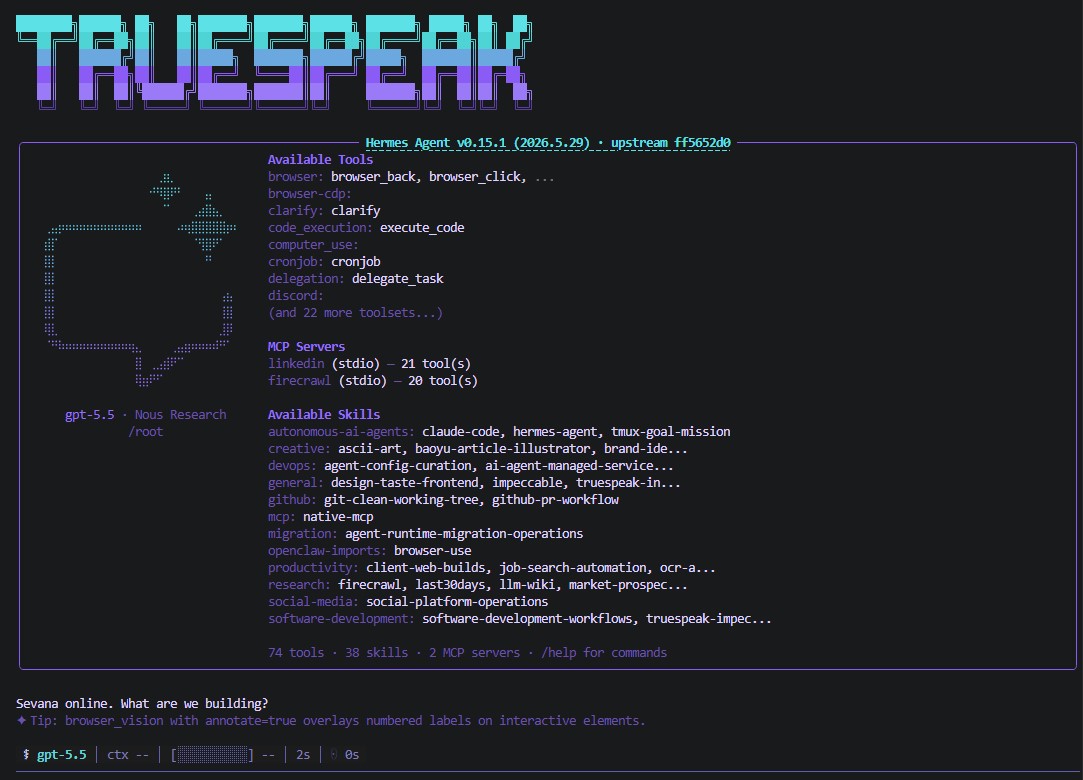
Managed AI Ops
Hermes is the managed operating layer behind Truespeak. It takes work through chat, runs scheduled checks, uses approved tools, reports exceptions and stays quiet when everything is healthy.
- Watches recurring tasks, files, web sources, inboxes and operating signals.
- Uses skills and approval gates so repeat work does not start from scratch each time.
- Reports specific exceptions instead of filling the owner with dashboard noise.
- Turns repeat operational work into a managed loop, not another dashboard to babysit.
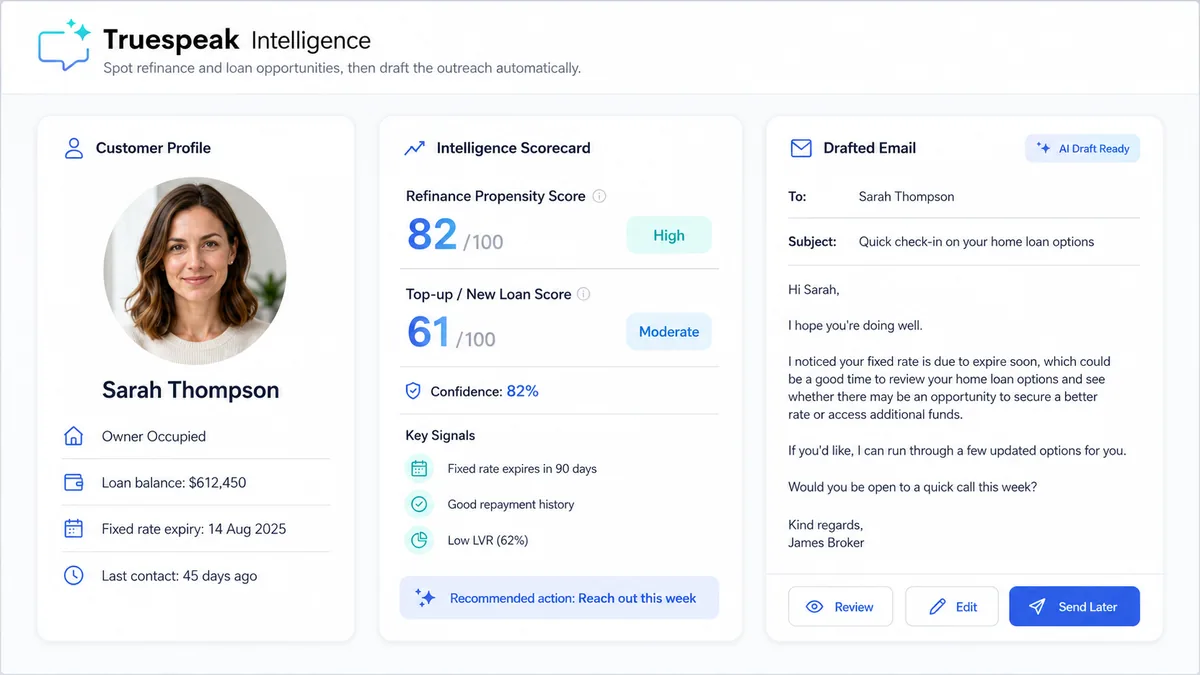
Truespeak Intelligence
Truespeak Intelligence turns a messy customer book into ranked action. The output is simple: who to call, why now, what to say and what evidence supports the call.
- Starts with the existing book instead of assuming new leads are the only answer.
- Outputs who to call, why now, what to say and what evidence supports the call.
- Keeps private client records out of view and uses polished call cards, not bulk dumps.
- Turns buried data into action, not another report.
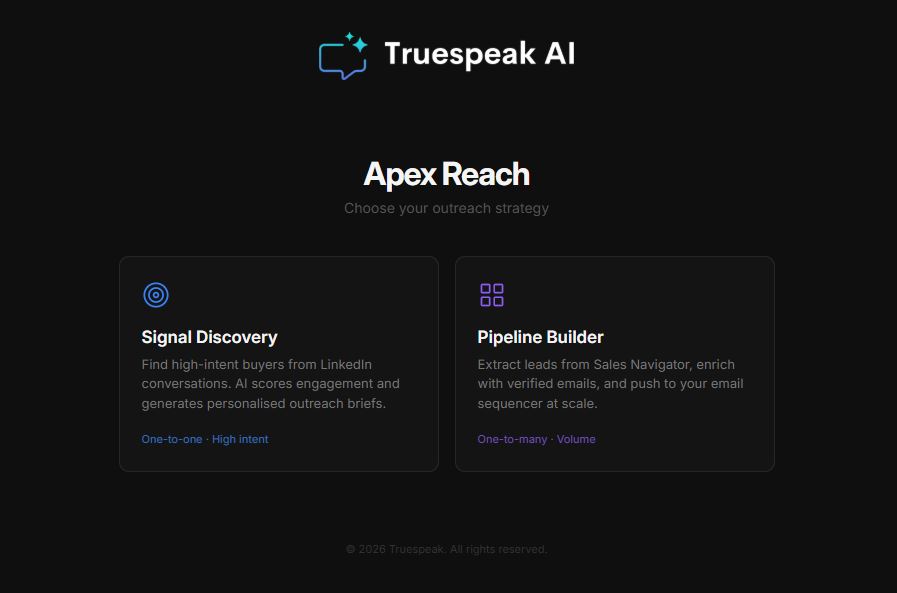
Apex Reach
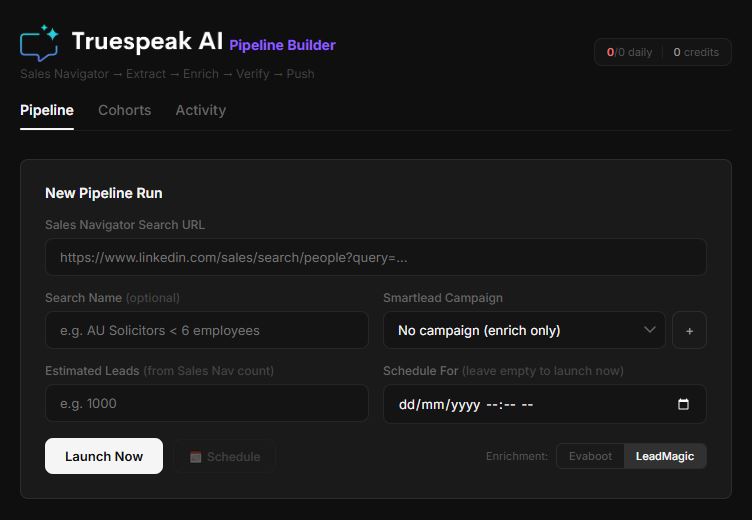
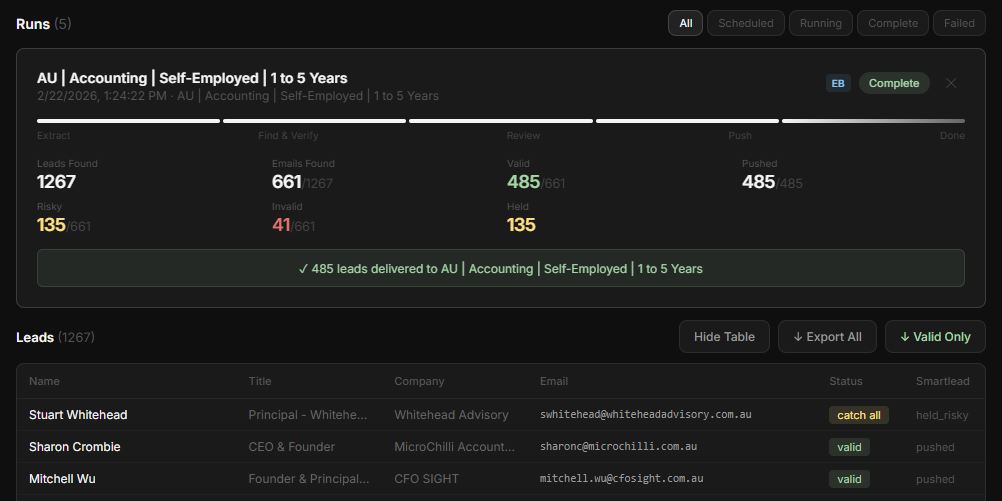
Apex Reach turns prospect research into a controlled lead pipeline. One run produced 1,267 verified leads, but the important part is the discipline: score, enrich, verify, brief and require human approval before outreach.
- Signal discovery identifies which prospects are worth deeper work.
- Pipeline building turns selected prospects into verified, briefed opportunities.
- Nothing needs to auto-send for the system to create value.
- Keeps volume controlled by rules and review.
Invoice Nudge
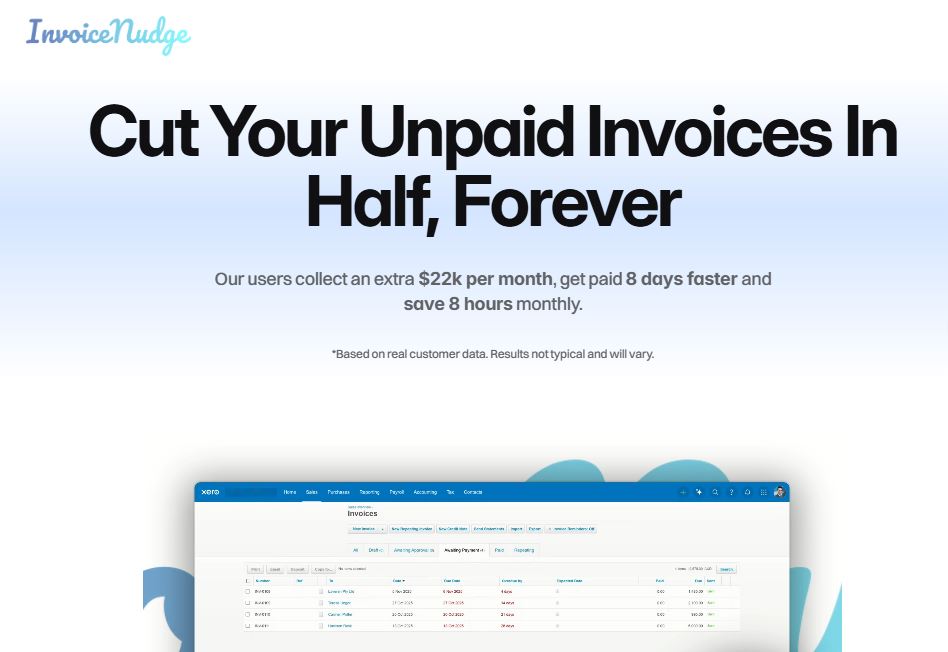
Invoice Nudge handles the awkward rhythm of invoice chasing: check status, choose timing, read the relationship context, draft the reminder, wait for approval where needed and update the record.
- Removes the awkward memory burden from routine invoice chasing.
- Keeps tone, disputes and relationship-sensitive accounts under human control.
- Logs status so the business knows what has happened and what is still open.
- Supports trust-sensitive admin without making the business sound robotic.
My Strata Training and Sld
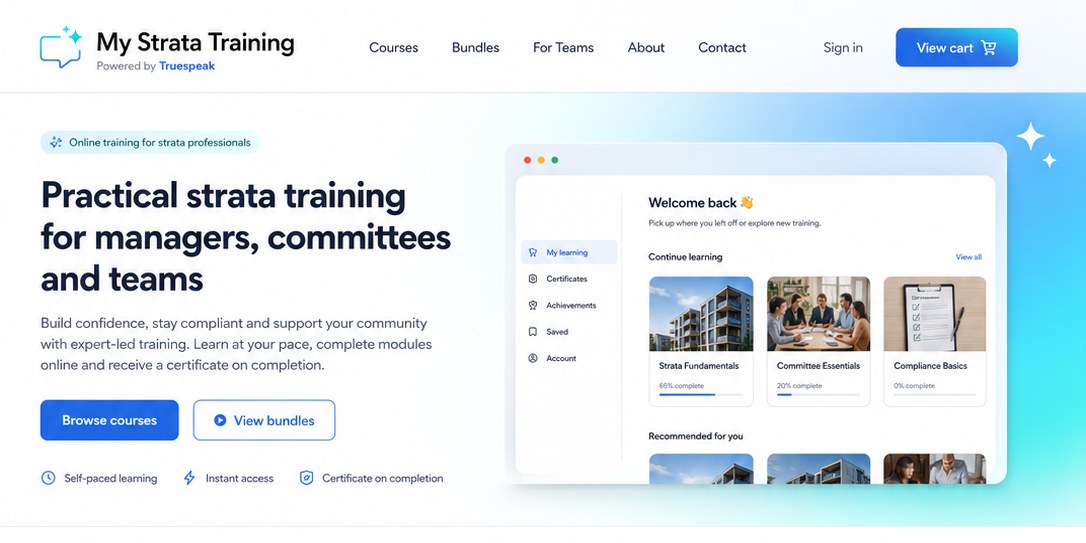
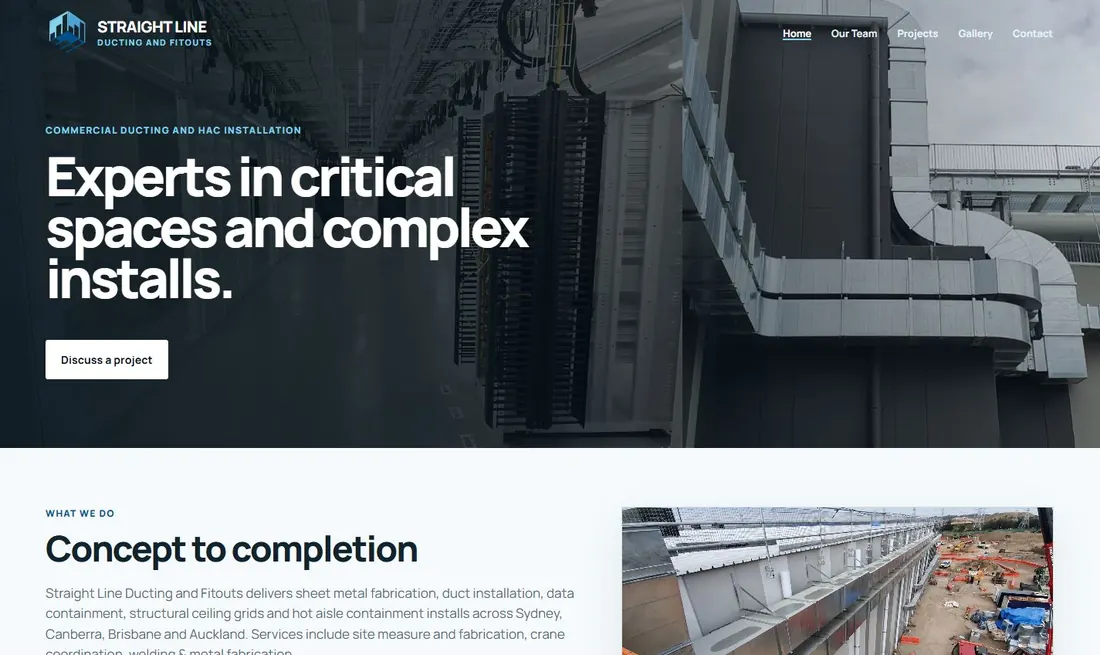
Client work shows the same operating discipline outside Truespeak-owned systems. My Strata Training connects payment, learner access and certificates. Straight Line Ducting needed a polished web presence that matched the seriousness of the business.
- Maps the buyer, admin or learner journey before choosing the tool.
- Connects enquiry, payment, access, certificate, quote or follow-up into one operating path.
- Keeps claims conservative and focused on what the system actually does.
- Shows the method travels when the workflow is clear.
WHAT THESE BUILDS HAVE IN COMMON
The Handoff Is the Product
Different businesses need different tools. The useful shape is consistent: name the dropped work, gather the right context, prepare the next action, protect judgement and leave a clean record behind.
Name the Trigger
What starts the work: an enquiry, invoice date, stale CRM status, uploaded file, meeting note, message or scheduled check.
Gather Only Useful Context
Pull the facts that change the next action. Ignore data that sounds impressive but does not help a human decide.
Prepare the Next Action
Draft the reply, call card, task, brief, reminder, report or escalation note in a form someone can actually use.
Protect the Human Gate
Pause when relationship, money, compliance or uncertainty makes a blind action risky.
Record the Outcome
Write back status, notes, next action and failure signals so the system improves instead of repeating mistakes.
FAQ
Common Questions
Why are some screens cropped or selective?
Several systems touch private records, inboxes, payments or operational data. The page shows enough to explain the work without exposing client records or operational access.
Are these case studies or products?
Both. Some are internal systems, some are client projects and some are productised workflows. The common thread is practical work moving from trigger to next action.
Can these systems be copied into another business?
The exact implementation should not be copied blindly. The useful shape can: trigger, context, decision, action, approval, output and feedback.
What should we review first?
Start with whether each block feels commercially sharp, specific and safe to publish. If a claim feels too specific, it should be softened before production.
RELATED PAGES
Where This Connects Next
The useful operating system is usually a chain, not one isolated automation. These are the pages most buyers should read next.
 Sonny HovsepianDirector, Truespeak
GET STARTED
Review Your First Operating Loop.
Bring one messy handoff. We will map what should be captured, what should be drafted, what should be approved and what should be logged.
Request a discovery call